





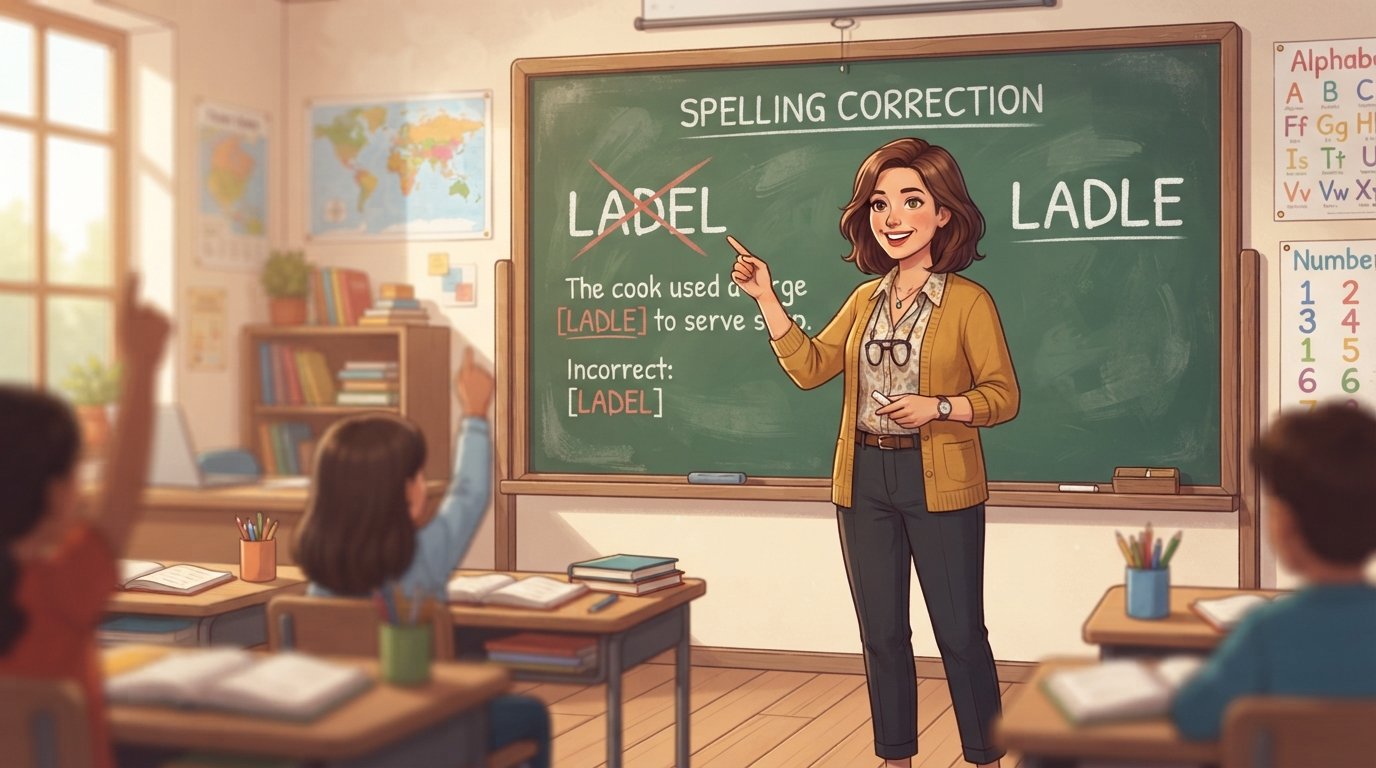
If you’ve ever paused mid-sentence wondering about Ladel or Ladle, you’re definitely not alone. Quick answer up front: it’s “ladle.” No “e” before the “l.” If you’ve been typing “ladel” without a second thought, don’t worry — you’re in very good company. This is one of those words that trips up way more people than you’d expect, and honestly, it’s easy to see why once you look at how the word is built and how it sounds out loud.
Let’s really dig into the Ladel or Ladle debate — the spelling, the meaning, where the confusion comes from, and how to make sure you never second-guess yourself again.
So What Is a Ladle, Anyway?
A ladle is that big, deep-bowled spoon with the long handle sitting in almost every kitchen drawer. It’s the tool you reach for when you’re dishing out soup, stew, chili, gravy, punch, or pretty much anything liquidy that needs to move from a big pot into a smaller bowl or cup without splashing everywhere.
Think about the shape for a second — it’s designed that way on purpose. The deep, rounded bowl at the end lets it scoop up a generous amount of liquid in one go, while the long handle keeps your hand a safe distance from steam and heat. It’s a simple design, but it’s stuck around for centuries because it just works.
You’ll find ladles in all kinds of materials too — stainless steel, wood, silicone, even cast iron for the heavy-duty versions. Some are small and dainty for sauces, others are huge and built for serving soup out of a stockpot at a big family dinner.
Why Does the Ladel or Ladle Mix-Up Happen So Often?
Honestly? It mostly comes down to how the word sounds when you say it out loud. Try it — “lay-dul.” Your brain kind of wants to end that with an “-el” sound, the same way words like “novel” or “travel” do. That little mental shortcut is enough to send plenty of people typing “ladel” without even realizing it.
There are a few other reasons the Ladel or Ladle confusion happens so often:
- Pronunciation over spelling. Most of us learn common words by ear long before we ever see them written down, and “ladle” isn’t a word we write very frequently.
- Autocorrect isn’t always reliable. Depending on your keyboard or app, “ladel” might slip through without a red squiggly line under it, which makes the mistake feel “confirmed” even when it isn’t.
- Rare exposure in daily writing. Unless you’re a recipe blogger, a chef, or someone who cooks and writes about it often, you might go months without ever needing to type this word — so when it finally comes up, the correct spelling doesn’t feel automatic.
- Similar-sounding words nearby. Words like “label,” “level,” and “novel” all share that “-el” ending, and your brain can borrow that pattern without meaning to.
None of these reasons make the mistake embarrassing — they just explain why so many people search for Ladel or Ladle every day trying to double-check themselves.
One Word, Two Jobs
Here’s something genuinely useful about “ladle” — it’s not just a noun sitting quietly in your kitchen drawer. It also works as a verb, describing the action of serving something with it. That dual role is actually a big part of why this word shows up so often in recipes and cooking instructions.
As a thing (noun):
- “Grab the ladle from the drawer, would you?”
- “This soup pot came with its own matching ladle.”
As an action (verb):
- “She ladled the soup straight into the bowls.”
- “He ladled the gravy generously over the mashed potatoes.”
Notice how naturally it shifts between the two. That flexibility is one of the reasons English learners sometimes stumble on the Ladel or Ladle question — it’s not always obvious from context whether the word is naming an object or describing an action, especially in fast, casual speech.
A Trick to Never Mess Up Ladel or Ladle Again
If you want a foolproof way to lock the spelling in permanently, try this: line “ladle” up next to other everyday words that share the same ending pattern — “table,” “candle,” “handle,” “cradle.” Notice they all follow the same “-le” structure, not “-el.”
Once you see that pattern, it clicks fast. You’re not spelling “ladle” in isolation anymore — you’re spelling it the same way you’d spell a dozen other common words you already know by heart. That’s usually all it takes for “ladel” to start looking visibly wrong the next time you go to type it, and for the whole Ladel or Ladle question to stop bothering you for good.
Another trick some people like: connect it to “liquid.” Both words start with “l,” and a ladle’s entire job is moving liquid around. A small, silly association like that can be surprisingly sticky in memory.
Seeing It in Action
Reading a word in real sentences helps cement it way more than just staring at the definition. Here are a few natural examples:
- “Can you pass me the ladle? The soup’s ready to serve.”
- “He ladled the sauce generously over the noodles.”
- “A sturdy metal ladle handles hot liquids way better than a flimsy plastic one.”
- “Grandma always kept her favorite wooden ladle hanging right above the stove.”
- “The caterer ladled punch into cups as guests walked past the table.”
Notice how the word slides comfortably into casual, everyday sentences — nothing about it feels forced or overly technical once you see it used naturally.
A Few Cousins in the Kitchen Drawer
While we’re on the topic, it’s worth knowing a few other utensils that often get grouped together with the ladle, since they each have their own specific job:
- Spoon – The all-purpose one, used for eating, stirring, or measuring smaller amounts.
- Spatula – Flat and wide, great for flipping pancakes or spreading frosting.
- Whisk – The wiry, looped tool ideal for beating eggs or blending ingredients smoothly.
- Skimmer – A flat, perforated scoop used to lift solid food out of liquid, like pulling dumplings out of broth.
- Tongs – Not liquid-related, but often sitting right next to the ladle in the same utensil crock.
Knowing these distinctions doesn’t just help your vocabulary — it also makes following recipes a lot easier, since instructions often specify exactly which tool to use for a reason.
Common Mistakes to Avoid
Beyond the Ladel or Ladle spelling itself, here are a few habits worth building if you want to avoid slipping up with this word — or words like it — in the future:
- Don’t trust your ear completely. Pronunciation is a helpful guide, but English spelling doesn’t always follow sound logic perfectly.
- Proofread recipes and instructions carefully. A misspelled word in a recipe can look unpolished, even if the content itself is great.
- Watch autocorrect closely. Don’t assume that just because nothing got flagged, the word is spelled correctly — some tools miss uncommon words entirely.
- Read your sentence back out loud. Sometimes hearing a sentence helps catch an error your eyes glossed right over.
Frequently Asked Questions
Is it Ladel or Ladle?
It’s “ladle.” “Ladel” isn’t a recognized word in standard English — it’s simply a common misspelling.
How do you spell it correctly?
L-A-D-L-E.
What is a ladle used for?
It’s used to serve liquids like soups, stews, sauces, gravies, and even punch or other beverages served from a large container.
Is “ladle” a noun or a verb?
Both. As a noun, it’s the utensil itself. As a verb, it describes the act of scooping and serving something with it.
Why do so many people search Ladel or Ladle to double-check themselves?
Mostly a mix of pronunciation guesswork, limited exposure to the word in writing, and the fact that similar-sounding words end in “-el,” which makes the wrong spelling feel intuitive.
Are there other commonly misspelled kitchen words like this?
Yes — words like “spatula,” “colander,” and “whisk” also get misspelled fairly often, usually for similar reasons: they’re spoken more than they’re written.
Bottom Line
At the end of the day, whenever you’re unsure about Ladel or Ladle, remember the answer is always “ladle.” It’s a small detail, but small details add up. Whether you’re writing out a family recipe, drafting content for a food blog, or just sending a quick text about dinner plans, getting a word like this right adds a little extra polish to your writing without much effort at all.
Once the “-le” pattern clicks in your head, the Ladel or Ladle confusion likely won’t bother you again.